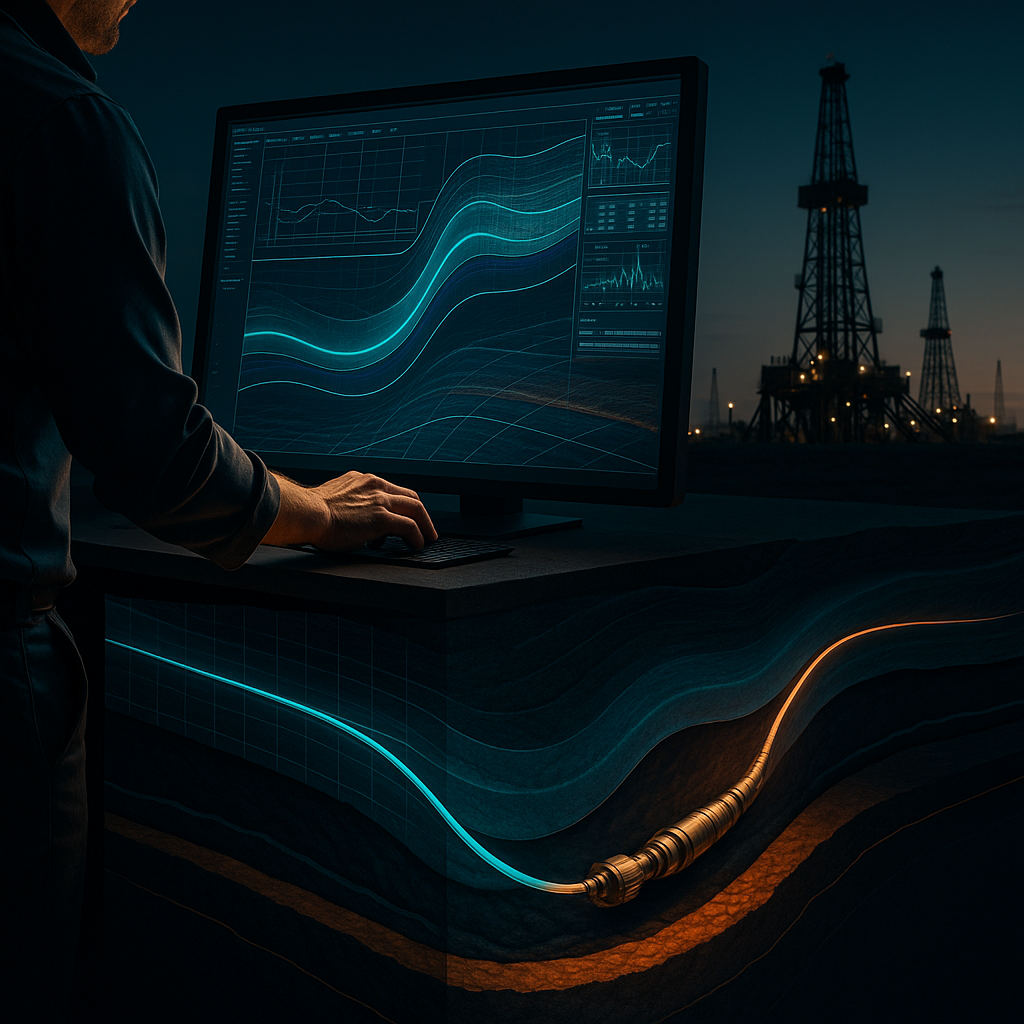
Redefining Geosteering with AlphaSight: Comprehending its Significance
Introduction
In the ever-evolving domain of petroleum engineering, geosteering has emerged as a pivotal technique to enhance the efficiency of drilling operations. The advent of advanced technologies, notably AlphaSight, has revolutionized how geosteering engineers navigate subsurface formations. This blog post delves into the significance of AlphaSight in redefining geosteering, supported by real-world applications and scholarly references.
Understanding AlphaSight in Geosteering
AlphaSight integrates real-time data acquisition and advanced analytics to provide geosteering engineers with precise insights into subsurface formations. This technology leverages various data sources, including well logs and seismic surveys, to create a dynamic model of the geological environment. According to the Society of Petroleum Engineers (SPE), real-time data analysis can significantly improve drilling performance, as evidenced by the paper "Real-Time Geosteering and Drilling Optimization: A Case Study" (SPE-192789).
Enhanced Decision-Making with AlphaSight
One of the most significant advantages of AlphaSight is its capability to enhance decision-making processes. Traditional geosteering methods often rely on static models that can lead to costly drilling errors. In contrast, AlphaSight provides real-time visualizations that allow engineers to make informed decisions about the well path, thereby reducing the risk of wellbore instability or hydrocarbon loss.
The Energistics standard for real-time data integration emphasizes the importance of interoperability between various data formats, which AlphaSight adheres to. This ensures that geosteering engineers can access and utilize diverse data sources seamlessly, thereby improving operational efficiency.
The Role of LookAhead in Geosteering
The LookAhead feature in AlphaSight plays a crucial role in predicting geological changes ahead of the drill bit. By analyzing historical drilling data, LookAhead can identify potential challenges and opportunities in the subsurface, allowing engineers to adjust their strategies proactively. A study published in the journal "Petroleum Geoscience" demonstrates how predictive modeling using advanced analytics has led to a 20% reduction in drilling time in complex reservoirs (SPE-220088).
Integration with GeoEngine AI
AlphaSight's integration with GeoEngine AI further enhances its capabilities, providing geosteering engineers with machine learning algorithms that can optimize drilling trajectories. The AI-driven analysis can identify patterns and anomalies in geological data that may not be evident through traditional methods. This level of insight enables engineers to make data-driven decisions that maximize hydrocarbon recovery while minimizing operational costs.
Practical Application of AlphaSight in Geosteering
To illustrate the practical application of AlphaSight, consider a scenario where a geosteering engineer is tasked with drilling a horizontal well in a complex shale formation. Utilizing the GeoSteering Workspace, the engineer inputs real-time drilling data, including rate of penetration (ROP), gamma ray logs, and resistivity measurements.
As drilling progresses, the LookAhead feature continuously analyzes the geological data ahead of the bit, predicting a transition from a gas reservoir to a water zone. Armed with this information, the engineer can adjust the drilling angle to maintain optimal reservoir contact, thereby avoiding costly downtime.
Furthermore, integrating WITSML standards ensures that data from various sources, such as mud logging and formation evaluation, can be seamlessly accessed and analyzed in AlphaSight. This holistic view enables geosteering engineers to make timely adjustments, improving overall drilling efficiency.
Summary
AlphaSight is redefining geosteering by providing geosteering engineers with the tools necessary for real-time data analysis and decision-making. By leveraging advanced features like LookAhead and GeoEngine AI, engineers can navigate complex subsurface formations with precision, ultimately maximizing hydrocarbon recovery. The integration of WITSML standards further enhances the operational efficiency of geosteering practices.
For those looking to enhance their geosteering capabilities, GeoMaster handles this natively — Start your free trial.
References
- SPE-192789: "Real-Time Geosteering and Drilling Optimization: A Case Study." Society of Petroleum Engineers. SPE.
- SPE-220088: "Predictive Modeling in Geosteering: A Case Study." Petroleum Geoscience. SPE.
- Energistics Standards. Energistics.