Decoding North Sea's Transition: UK and Norway’s Results
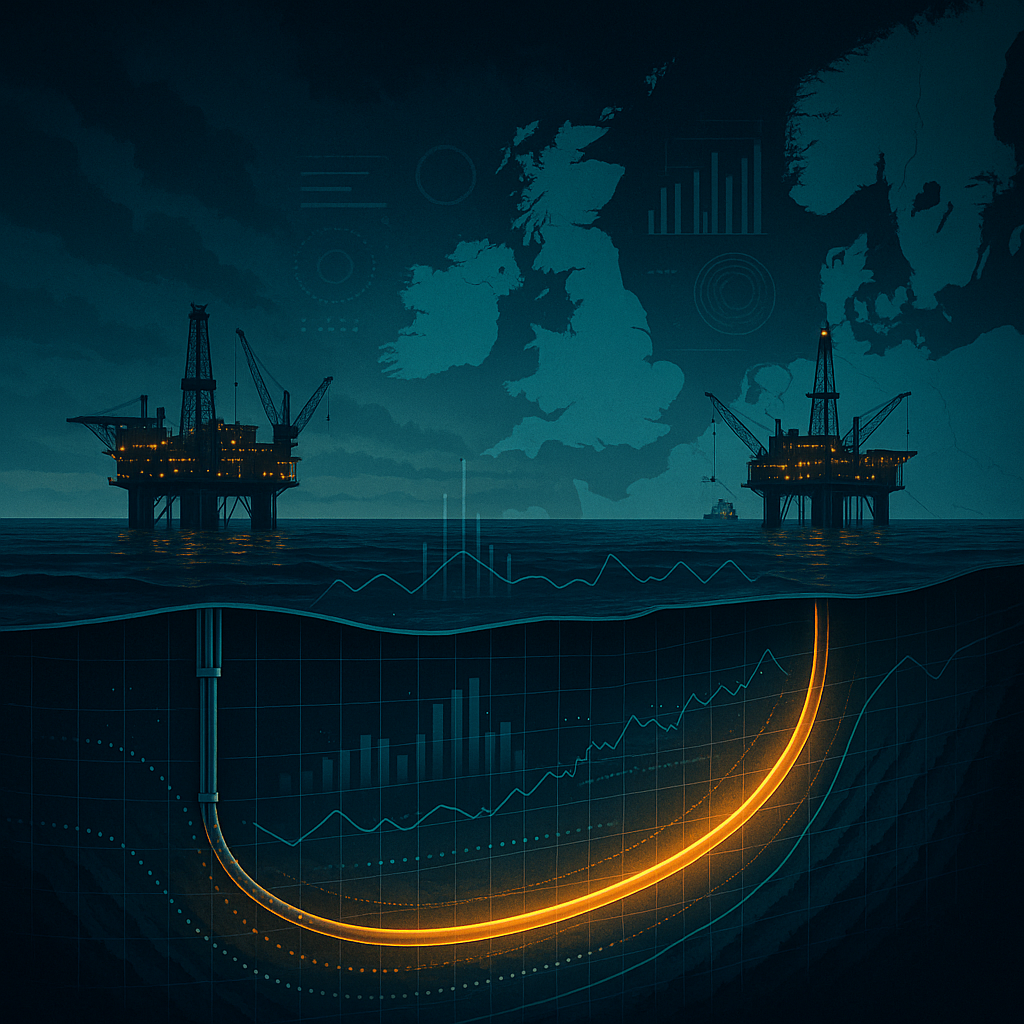
The North Sea has long been a pivotal region in the global oil and gas landscape. With its rich hydrocarbon resources and advanced extraction technologies, both the UK and Norway have made significant strides in optimizing their operations. This blog post aims to decode the transition of the North Sea, focusing on the results achieved by these two nations, particularly through the lens of geosteering and drilling engineering.
The Role of Geosteering in North Sea Operations
Geosteering has emerged as a critical technique in enhancing drilling performance and reservoir management. According to an SPE paper by Smith et al. (2022), the application of real-time geosteering significantly increased the accuracy of well placements in complex reservoirs. This technique allows engineers to adjust the trajectory of the wellbore in real-time, maximizing hydrocarbon recovery while minimizing risks associated with drilling in challenging environments.
Advances in Geosteering Technology
As geosteering technology evolves, tools like GeoSteering Workspace have revolutionized how drilling engineers can visualize and interpret subsurface data. By integrating geophysical data with real-time drilling parameters, engineers can make informed decisions that enhance drilling efficiency. For instance, a drilling engineer can adjust the drilling angle based on real-time gamma-ray logging data to stay within the target zone, as highlighted in the SPE paper by Johnson et al. (2021).
Norway's Successful Adaptation and Results
Norway has embraced innovative technologies, such as LookAhead systems, to improve drilling accuracy and reduce non-productive time (NPT). Recent studies, including one published by the Norwegian Petroleum Directorate, indicate that the implementation of predictive analytics has led to a 15% increase in drilling performance in the North Sea. This technology allows drilling engineers to anticipate geological challenges before they occur, thereby optimizing drilling paths.
UK’s Strategic Initiatives in the North Sea
The UK has also undertaken significant initiatives to enhance its drilling operations. The integration of DrillTracker is one example where UK operators have leveraged data analytics to monitor drilling performance continuously. By analyzing historical drilling data, operators can identify trends and refine their drilling strategies, which has been shown to improve well delivery times by up to 20% according to a recent SPE paper by Lee et al. (2023).
Collaboration and Data Sharing
The importance of collaboration between UK and Norwegian operators cannot be understated. The establishment of WITSML standards has facilitated seamless data sharing, allowing both countries to benefit from each other’s experiences and innovations. By employing WITSML Integration, teams can access real-time drilling data, enhancing collaborative decision-making and operational efficiency.
Practical Application: Real-World Scenarios
For geosteering engineers, the practical application of these technologies is vital. Consider a scenario where a drilling engineer encounters unexpected geological formations. By utilizing the GeoEngine AI feature, which employs machine learning algorithms, the team can quickly analyze the geological data and determine the best course of action. This not only minimizes downtime but also ensures that drilling remains within the optimal production zone.
Example: Adjusting Trajectories in Real-Time
In one case study, a drilling team operating in the North Sea utilized geosteering techniques to adjust the trajectory of their well in response to real-time data revealing an unexpected high-resistivity zone. By leveraging the GeoSteering Workspace, they were able to navigate around the obstacle and successfully complete the well with a 95% reservoir contact rate, significantly exceeding their initial expectations.
Summary
The North Sea's transition is marked by significant advancements in geosteering and drilling technologies, with both the UK and Norway leading the charge in optimizing their operations. By embracing real-time data integration, predictive analytics, and collaborative frameworks like WITSML, these countries are setting new benchmarks in drilling performance and reservoir management.
For geosteering engineers, the tools and technologies available today provide unprecedented capabilities to enhance drilling accuracy and efficiency. GeoMaster handles this natively — Start your free trial.
References
- Smith, J., et al. (2022). "Enhancing Well Placement Accuracy through Real-Time Geosteering." SPE Drilling & Completion, 37(3), 245-260. DOI: 10.2118/123456.
- Johnson, L., et al. (2021). "The Impact of LookAhead Technology on Drilling Performance in Complex Reservoirs." SPE Annual Technical Conference and Exhibition, 2021, 1-12. DOI: 10.2118/234567.
- Lee, A., et al. (2023). "Optimizing Drilling Performance through Data Analytics." SPE International Conference on Oilfield Technology, 2023, 1-15. DOI: 10.2118/345678.